Home of Cardio-Neuro-Cognitive-Behavioral Training
CNCBT Academy
Movement-based emotional regulation education developed through one
psychologist’s three-year self-training journey.
On this page
Meet the Creator
Richard Sohn, PsyD
Licensed psychologist in California and Texas, former U.S. Special Operations Command-Korea psychologist, and creator of CNCBT.
CNCBT began as a personal, structured self-training project that combined stair climbing, cognitive retrieval practice, and CBT/DBT-informed anger-management skills. The goal of this website is educational: to share the method, the story, and tools readers can study with appropriate medical and clinical caution.
“I did not find a shortcut. I found the stairs. Through science, movement, and relentless practice, I changed how I trained my own emotional responses.”

CNCBT Overview
What is Cardio-Neuro-Cognitive-Behavioral Training?
CNCBT is an educational training model that pairs physical activation with structured emotional-regulation practice.
In plain language, it asks a practical question: can skills such as awareness, acceptance, relaxation, active listening, accurate reflection, normalization, and problem-solving become more available when they are practiced repeatedly under controlled physical stress?

Why This Matters
We do not always think
our way into a new life.
Sometimes we train our way into the clarity that makes a new life thinkable.
My experience taught me that transformation can come from integrating small, repeatable practices: move the body, train attention, practice retrieval, regulate emotion, record progress, accept purposeful difficulty, and apply skills in real life long enough for new possibilities to emerge.
How It Began
It began with a doctor's warning.
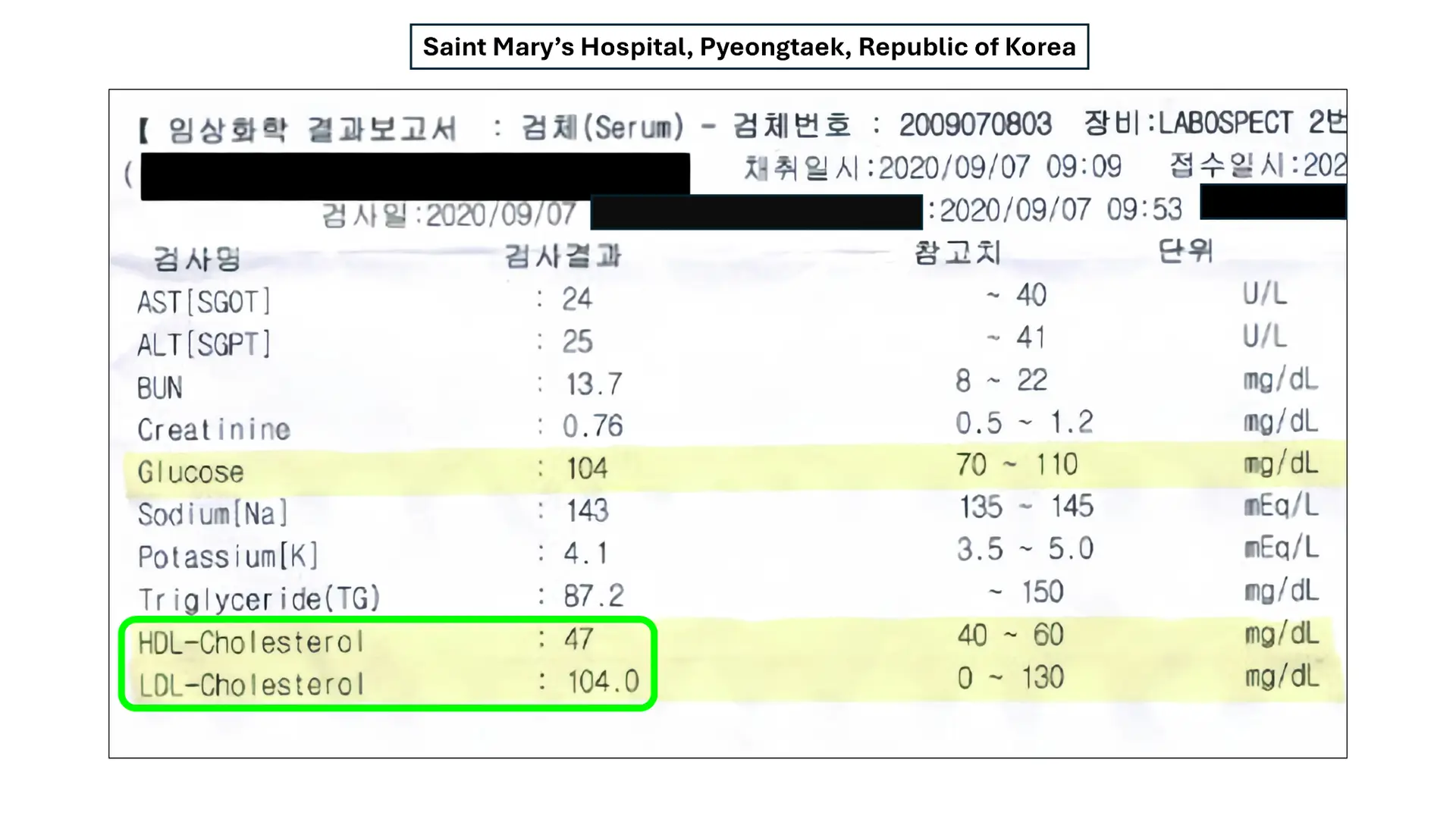
On February 2, 2019, a bloodwork report showed LDL cholesterol at 167.7 mg/dL, along with elevated blood pressure and fasting glucose. That warning became the beginning of a different kind of training.
I changed my diet, replaced processed foods with homemade bread and fresh vegetables, and became serious about stair climbing in the 21-story apartment building where we lived during my seven years supporting U.S. Special Operations Command-Korea.

Three Click Moments
Three thoughts changed the direction of the training.
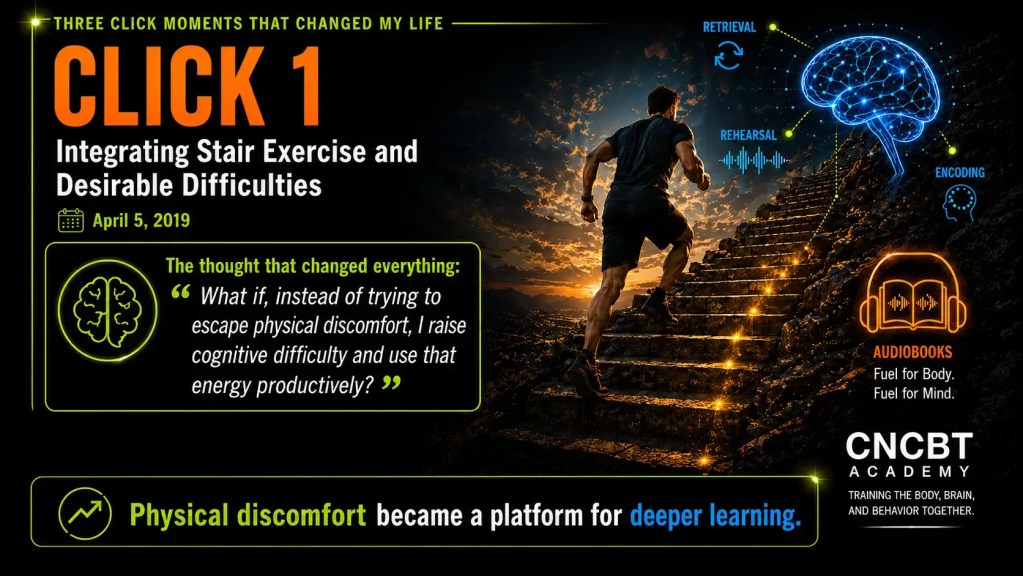
The thought that changed everything
“What if, rather than avoiding physical discomfort, I increase cognitive difficulty and channel that energy into something productive?”
Stair climbing became more than exercise. It became a place to encode, rehearse, and retrieve world economic history while the body worked under strain.
Physical discomfort became a training platform for deeper learning.
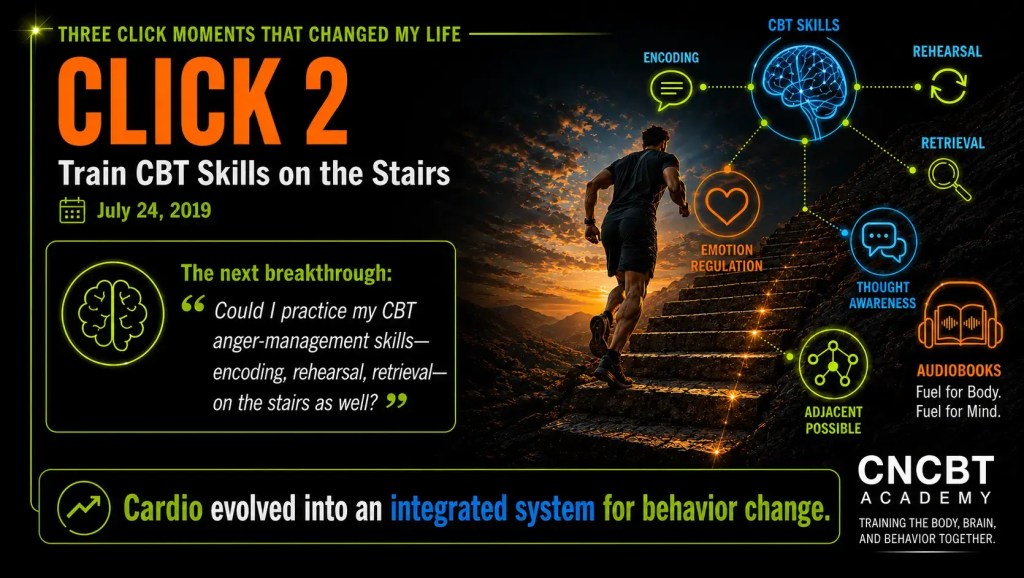
The next breakthrough thought
If world economic history could be trained on the stairs, could CBT-based anger-management skills be trained the same way?
That question opened the adjacent possible: exercise became a training forum for cognition, emotion regulation, and behavior change.
CNCBT was born from this breakthrough as a movement-based emotional regulation skills-training model.
What began as cardiovascular exercise evolved into an integrated system for practicing cognitive-behavioral emotional regulation skills while the body was physically activated.

A new life direction
October 11, 2021, after 34 months, 945,480 stairs, two full world-history learning cycles, and five consecutive months of focused AARV(4) practice, one question became clear: What will I devote the next two decades of my life to?
The answer became CNCBT Academy.
The Science Lens
Three ideas helped me understand what happened.
Bjork’s Desirable Difficulties
Lasting learning often requires purposeful challenge, repetition, feedback, and adjustment. Stair climbing became productive difficulty rather than discomfort alone.
Johnson’s Adjacent Possible
New possibilities can emerge when existing elements are recombined. A stairwell, an audiobook, Bluetooth headphones, and physical effort became a classroom, gym, and training laboratory.
Medina’s “Evolutionary Performance Envelope”
Human cognition evolved in motion. CNCBT explores how movement, stress, attention, learning, and real-world problem-solving can be trained together.
Training Preview
Try the 8-minute CNCBT session structure.
This preview shows the rhythm used throughout the workbook: prepare, train through Active Movement, then enter Reflective Stillness.
- 0:30 Prepare & Set Intention
- 4:30 Encode, Embody, Retrieve
- 3:00 Reflective Stillness
Book
Climbing Out of Anger
A personal story of determination, science, and self-transformation through nearly one million stairs and structured emotional-regulation practice.
Workbook
Practice Pages
Downloadable sample and comprehensive workbook pages can guide each CNCBT phase: Awareness, Acceptance, Relaxation, and V(4).
App
Training Tracker
8-Minute CNCBT Trainer app can track training sessions, Emotional Regulation Scale (ERS) ratings, recall practice, and progress across time.